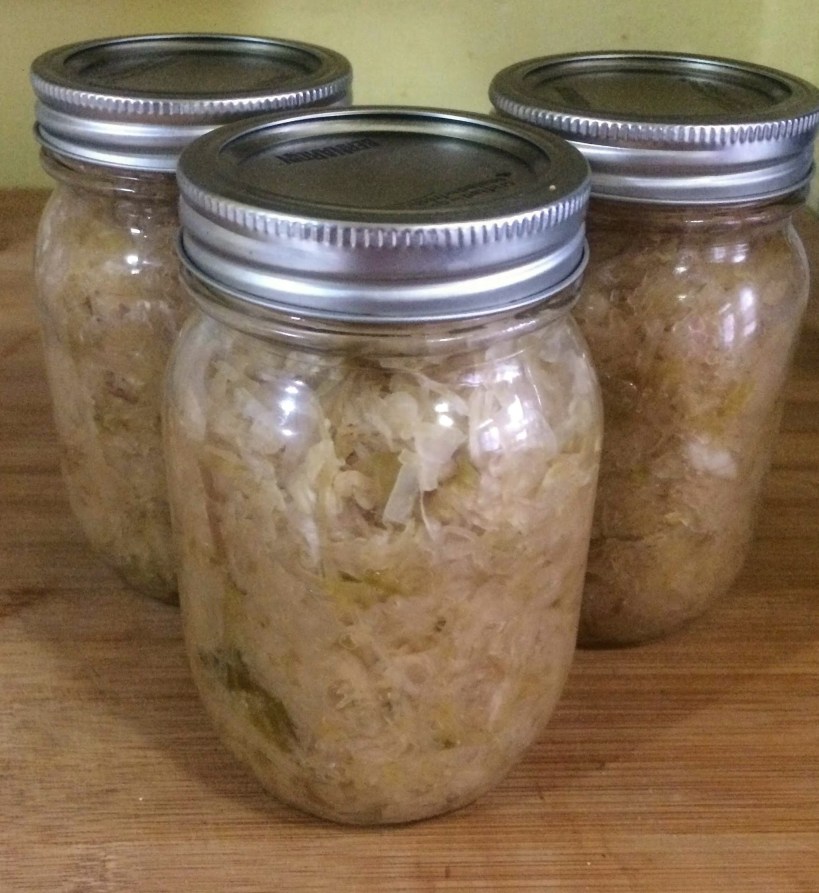
If you have never made your own sauerkraut at home, it’s time to start. Not only is it incredibly easy, you will be amazed with the results and it will be so much better than buying it from your local supermarket. It makes a great gift and will be a hit at your next dinner party on some thick sausages or on a chacuterie board
Sauerkraut is made through lactic acid fermentation which is similar to how kimchi is made. The cabbage is finely shredded, layered with salt, and left to ferment. Fully cured sauerkraut keeps for several months in an airtight container stored at 15 °C (60 °F) or below. You don’t need to refrigerate although that will prolong the shelf life.
For this recipe, we will be adding a sweet twist with the addition of apples into our fermentation. Apples pair very well with the sour acidic flavor from the cabbage; giving it a crisp flavor. I have tried this recipe with sour apples like Granny Smiths and sweeter apples like Royal Galas. Both yielding the same results just different levels of sweetness. Today, I am using some crisp Spartans.
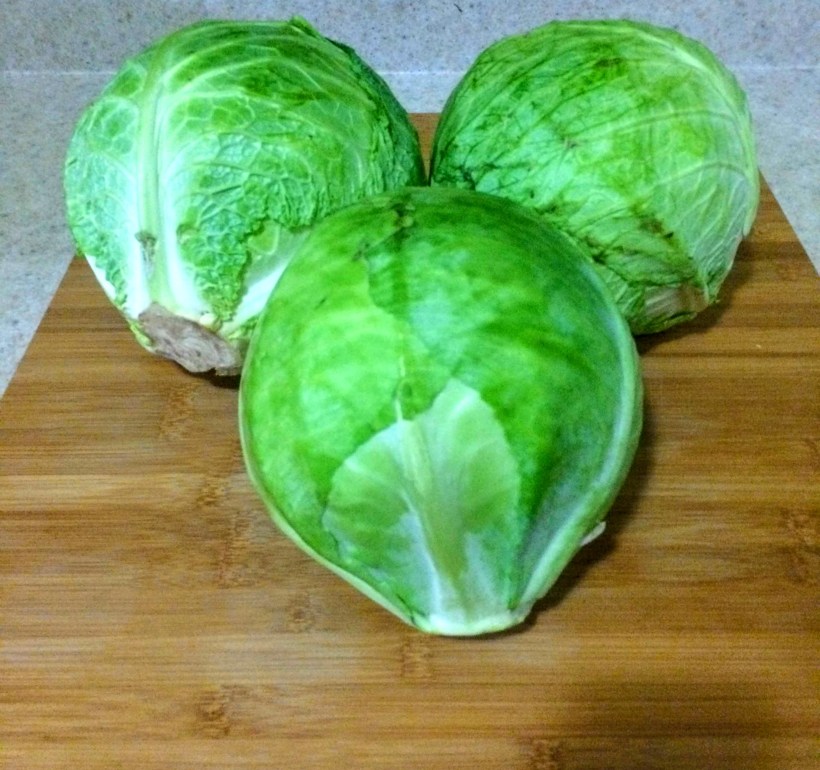
To begin, you will need to start with the cabbage. For this recipe, I will be using 3 heads of cabbage. You can use however much you want to, as long as you follow the guidelines for sauerkraut salinity.
Start by weighing out your cabbage, if you don’t have a food scale at home (you should get one) you can also find out the weight when you purchase the cabbage. You just have to make sure you note it somewhere.
INGREDIENT 1:CABBAGE
 INGREDIENT 2:SALT

There are plenty of salts you can use for fermenting but I mostly stick to Kosher salt, not just for fermenting but in general. This post is about sauerkraut and not about salt varieties though. I just want to recommend using Kosher salt for this recipe.
The reason we want to weigh out our cabbage is because you want to add the right amount of salt. Fermentation of sauerkraut is done through a self-brining process. Salt is evenly mixed with finely sliced cabbage to allow moisture to be drawn out of the cabbage to form a brine in which safe fermentation can proceed. For sauerkraut you will want it to be in the range of 1.5-2.5% salinity for the brine. Which is achieved by adding approximately half a tablespoon or 7.5ml of salt per pound of cabbage. In grams that works out to be 16.5 ml or a bit over a full tablespoon to 1 kg of cabbage.
The reason you want the correct salt ratio is because you want to create a perfect atmosphere for the lactic acid fermentation to take place. If it does not have enough salt it will ferment quicker but it also has a higher chance of growing mold which will make your sauerkraut inedible. If you have too much salt the sauerkraut won’t be able to ferment enough and you will wind up with salt cabbage brine with lackluster flavor.
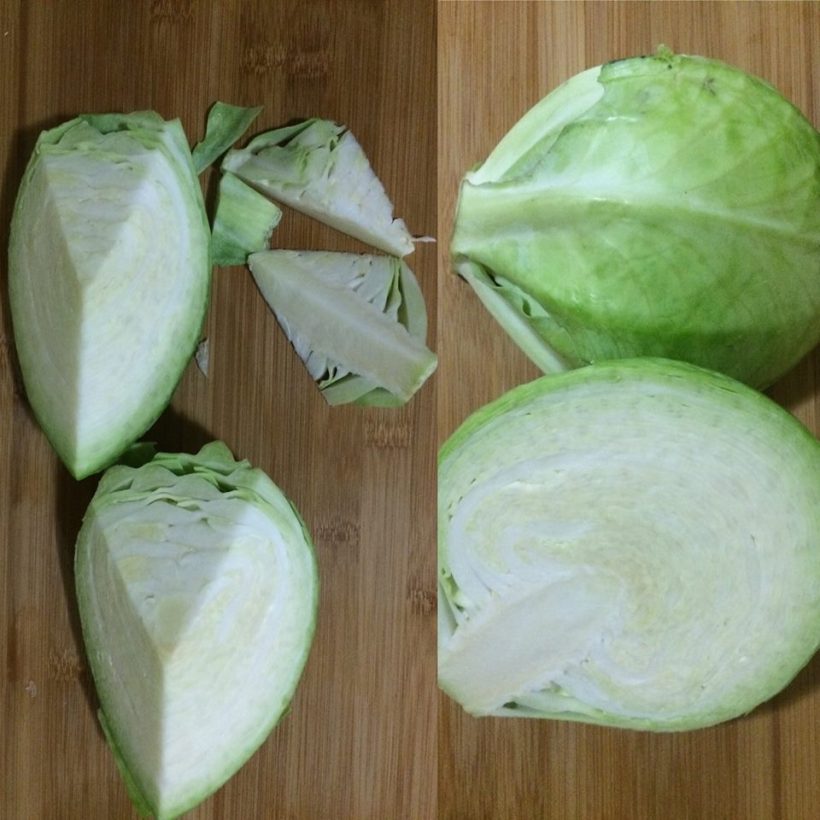
To begin, start by cutting the cabbage into quarters and removing the stems.
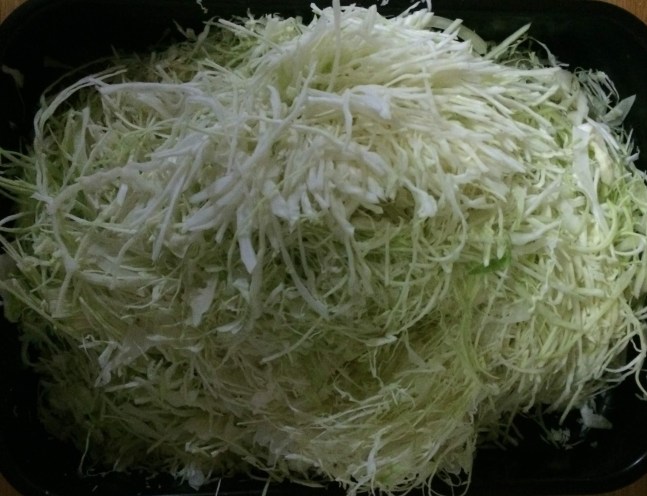
Then shred the cabbage into thin long strands, I used a mandolin slicer but you could also use the shred attachment of a food processor. Shred the cabbage in batches in a large container, I used a roasting pan. When it is finished it should look like this:
Now at this point you are gonna start to realize you have way more cabbage than you thought. It is ok though, after salting the cabbage it will wilt and decrease in overall size. Now for salting the cabbage its best to do it in batches. Simply place your cabbage in a large vessel to mix it in. I used a large canning pot. Pour part of your salt around and onto the cabbage.
The best thing to do is massage the salt into the cabbage, as you do this you will start to feel the water coming out of the cabbage. When you feel the cabbage feeling very wet and wilted add more salt on and continue the process of salting and massaging until it looks like this.
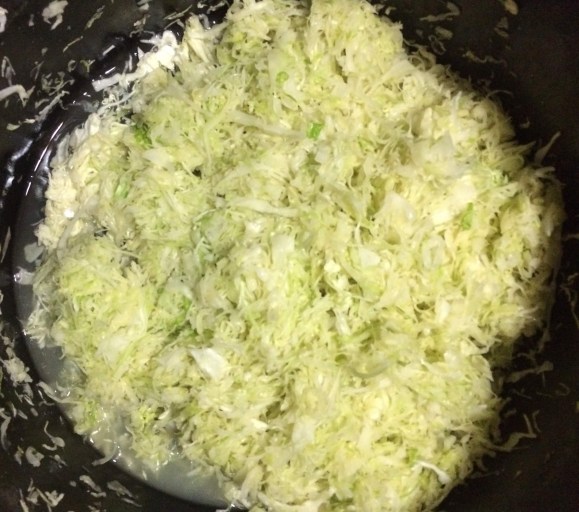
Now just pack it all into a large vessel and weigh it down so it is submerged under its own juices. I used a pot and some plates on top that happened to fit perfectly and kept the sauerkraut submerged under the liquid.
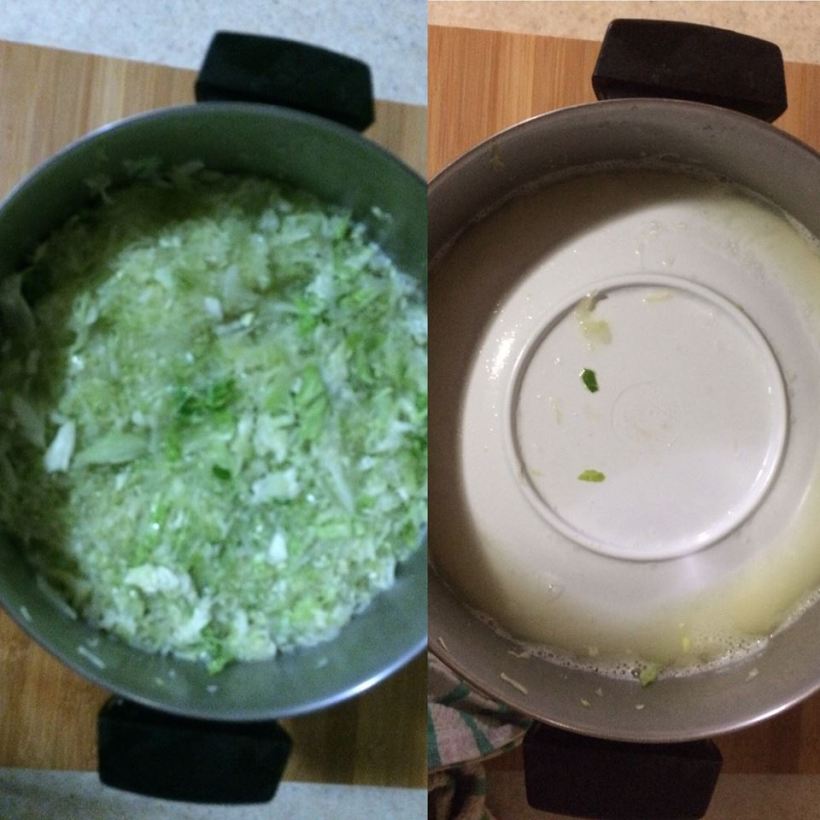
If you do not have conveniently fitting plates for your fermentation vessel than a good hack would be to trace out the circumference of the vessel onto a piece of cardboard and cut it out. Wrap the cardboard in plastic or place in a large freezer bag to place on top of the sauerkraut and use something to weigh it down.
Now that is it for your basic sauerkraut, you could keep it as it is and place in jars to ferment alternatively to a pot. For this recipe though you will want to keep it in a large container to come back to it in a week to add the apples.
After you have patiently waited a week and let the miracle of lactic acid fermentation take over the cabbage, you will start to get a great sauerkraut smell and it will be time to add the apples. For this batch I am using 10 lbs or about 4.4 kg of red spartan apples. You can shred or julienne the apples, I used a mandolin slicer with a julienne attachment but grating the apple also works very well. Make sure you grate or julienne the apple directly into the sauerkraut and mixing it into the juices before the apple oxidized and turns brown. Although it will still taste amazing, brown sauerkraut have a bit less than appealing look to them.
Now after you have mixed all the apples in you can either keep it in the same large vessel you used before or you can also put it into jars now. Either way you will want to let it sit out at room temperature for another week to ferment before storing it in the fridge.
When I canned this recipe I wound up with over 12 pint sized jars which are 16 0z or about 500 ml. It worked out perfectly to can it up for gifts and still have some leftover for myself.
I hope you enjoy making sauerkraut at home as much as I do and that it sparks an interest in doing more home fermentations. Until the next one, remember to keep it simple but full of love.
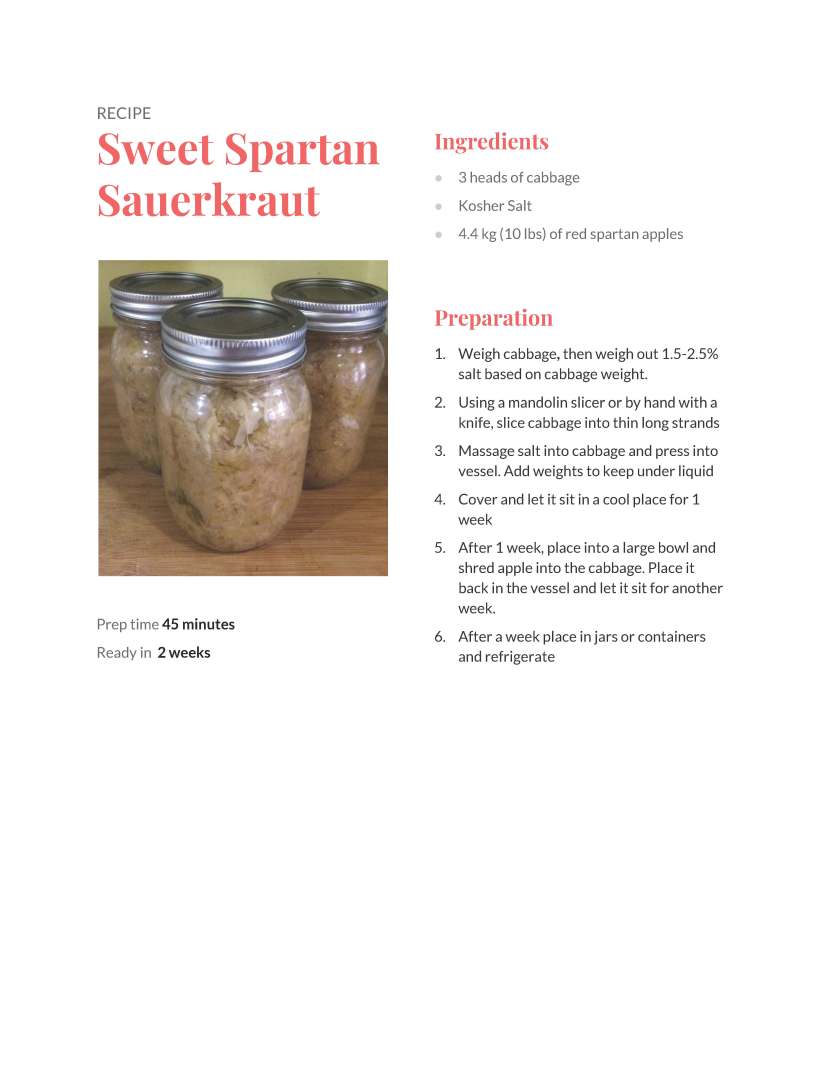
Recipe Card Below
 Cooking for Kristina