Classic Fermented Hot Sauce

Have you always wanted to bottle your own “I-put-that-shtuff-on” everything sauce or test your limits with a fiery face-melting concoction?

Well its a lot easier than you would think. The prep takes very little time. All you need is  a little patience while your sauce ferments.

Fermentation of chilis dates back thousands of years as a method of preservation. This method was later turned into hot sauce and has been a popular condiment throughout Asia, Europe, Africa, and the Americas for centuries but it was not until the 1800’s that it was commercially bottled and sold.

I am going to take you through some steps to making a delicious fermented chili sauce that is sweet, spicy and tangy. You can also use this basic recipe as a guide to your own creation and add whatever spicy peppers your pallet desires (or can handle).

First thing to do is prep the vegetables.
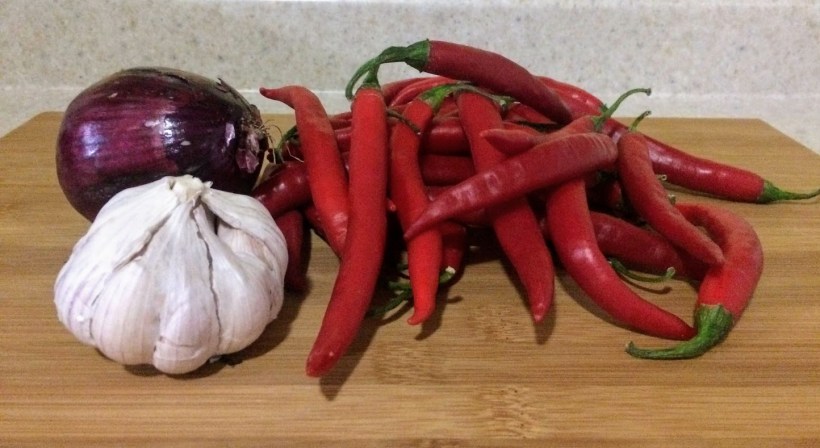
ingredients

For this recipe, we will be using:

  • 150 g (aprox. 5 oz) cayenne chillis
  • 2 cloves of garlic
  • 1/2 red onion
  • kosher salt
  • distilled water

Tools I recommend for this are:

  • quart sized glass jar
  • spray bottle
  • pH strips
  • oral syringe
  • no-rinse sanitizer
  • rubber cork (for quart jars)
  • airlock

First thing to do is take the stems off the chilies. I recommend using kitchen gloves when handling the chilies so as not to transfer the spicy oils from the peppers to places that you don’t want spicy oils.

remove stems

Next step is to simply chop up the chilies into smaller pieces.

chop chillies

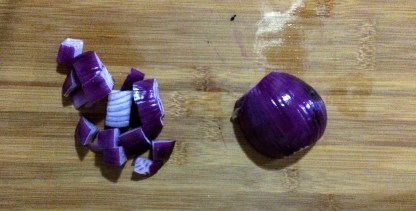
Now the dice the onion.

chop onion

Peel the garlic and the bulk of your prep is done.

The next step is one of the most crucial for fermenting and it’s sanitizing your fermentation vessel. What I recommend for this is a no-rinse sanitizer like Star-San.  you simply follow the instructions on your bottle to dilute the concentrated sanitizer with distilled water.

I also recommend buying some pH strips, a spray bottle, and oral syringes from your local pharmacy. It’s important to test the pH levels of your product. You use the syringes to better measure the concentrated sanitizer in small volumes while diluting.
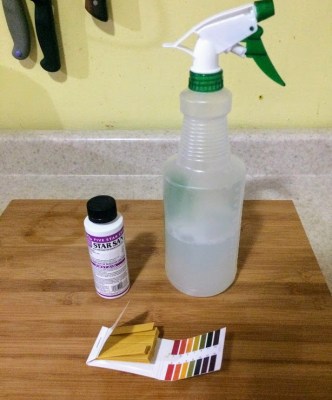
sanitize

After you have made a sanitizing solution, pour it into a spray bottle then spray down the inside of your fermentation vessel. I am using a glass jar for my vessel which is fitted with a rubber cork and air lock.

airlock

You can find these at beer and wine making stores or online. They come in different sizes for different jars and are perfect for fermenting because they let the gasses escape from your vessel without having to periodically burp it. It’s good to routinely check up on your fermentations but using an airlock brings piece of mind. You won’t have to worry about things like forgetting to burp your jar and coming home to an exploded jar with the scent of fermented chilies permeating your home.

Now that your vessel is sanitized you can place all your vegetables inside the jar and add the salt. A good rule of thumb for fermenting is to use 2-3 tbsp of salt per liter of water. Since I am using a standard quart sized jar which is a bit under a liter, I used 2 tbsp.

To finish, just fill up your jar with distilled water leaving about 4 cm (1.5″) of space from the top and using some type of weight to keep the chilies submerged. I used an egg cup but pickling pebbles also work very well. Next fill the airlock up with water to the fill line and place it in the rubber cork and put the cork in the jar. It should look like this.

fermet time

That is it for now, just place your vessel in your fermentation station and if you don’t have a fermentation station then a closet works just fine. For your first batch of sauce, I recommend you ferment it for a month. It will give the microbes ample time to break down the chilies and you will not be disappointed with the delicious flavor and probiotics that come with the wait.

So let the fermentation take place and check back in a month for the next part.

Part 2
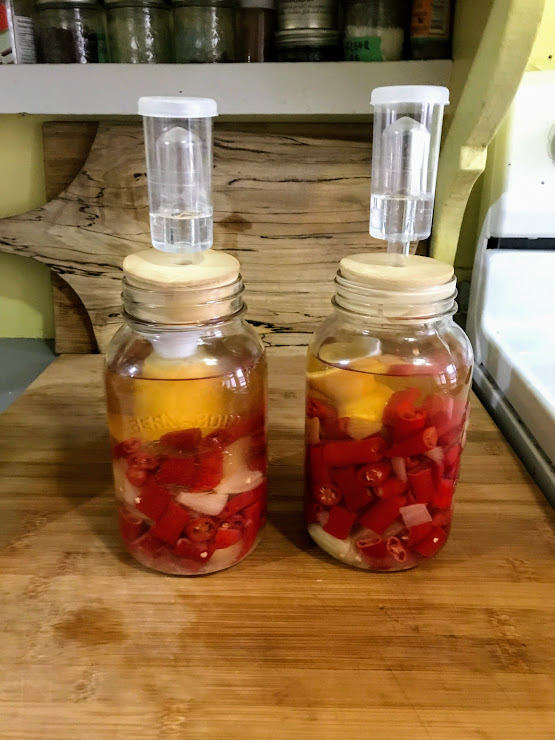
 

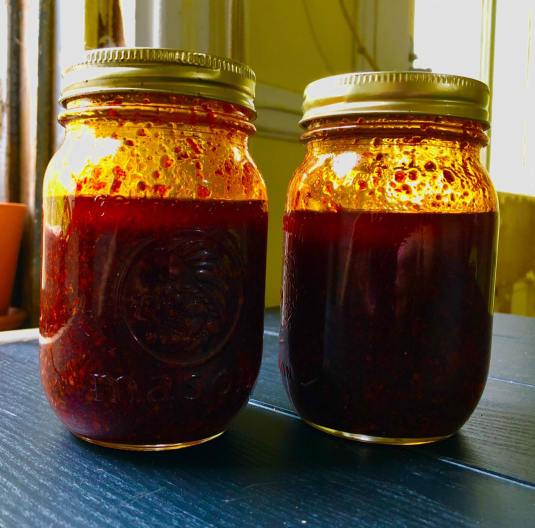
fermented 1 month later

Now that you have patiently waited for a month it is time to finish the sauce. Be prepared that when you open the jar you will be met with a very strong odor that I love but is not loved by all. (Note: I made a double batch when creating this recipe which is why I have 2 jars in the picture shown above).

For this part you will want to have the following ingredients:

  • 250 ml (1 Cup) raw cane sugar
  • 250 ml (1 Cup) white vinegar
  • 30 ml (2 tbsp) xantham gum

The sugar will sweeten the sauce and accent the flavors. You can substitute refined white sugar  you don’t have raw cane sugar but I personally prefer the latter.

The white vinegar will slow down the fermentation process and add to the overall flavor but you can also substitute other types of vinegar or citric acid from fresh lemons and limes.

Xantham gum is the one ingredient I recommend you do not substitute. Xantham gum is a natural thickening agent that will help stabilize your sauce.

The next step is just to blitz the fermented mixture into a sauce. Transfer your mixture to a blender or food processor and add the final ingredients and buzz it until it is pureed.

blitz

Now all you have to do is press the sauce through a wire mesh strainer to remove excess seeds and skin giving your sauce a perfect smooth finish.
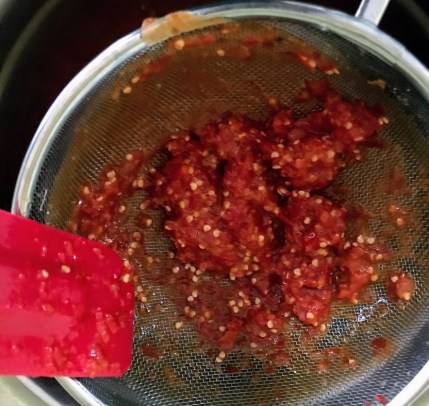
straining

Now the last step is the most important!

Taste and enjoy your hot sauce. If you love a spicy kick as much as I do then you will enjoy it on just about anything like pizza, tacos, fried chicken or spaghetti. I even put it on a peanut butter sandwich when I’m craving a nice kick.

I hope you enjoy making your own hot sauces and exploring how far you can go up the Scoville scale. Until the next one, remember to keep it simple but full of love.
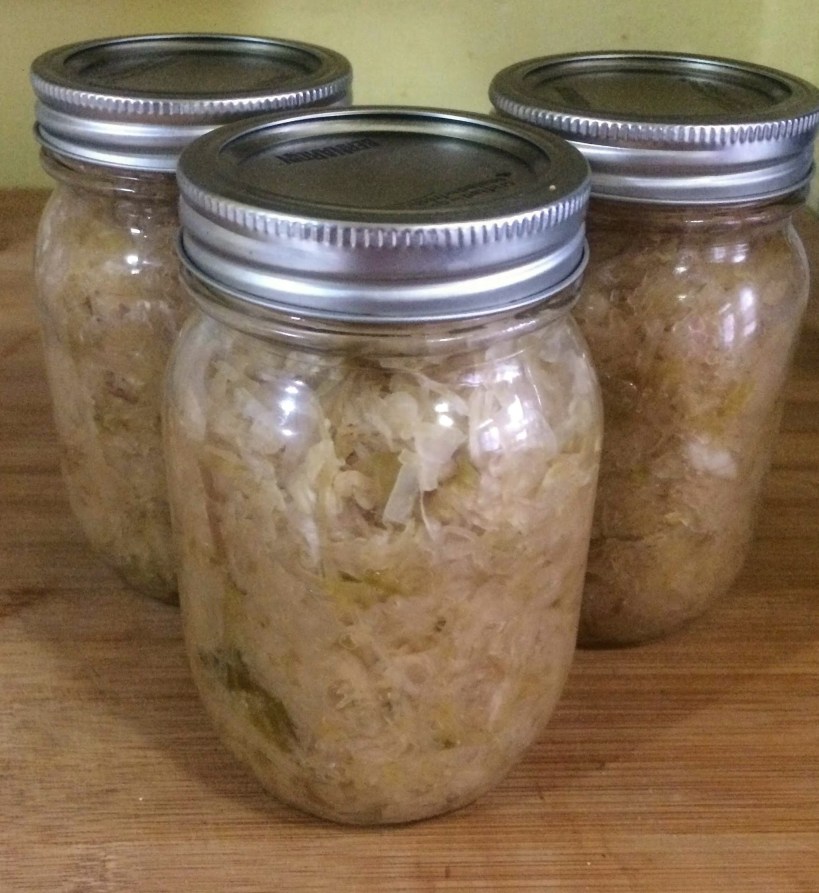
 

Sweet Spartan Sauerkraut

If you have never made your own sauerkraut at home, it’s time to start. Not only is it incredibly easy, you will be amazed with the results and it will be so much better than buying it from your local supermarket. It makes a great gift and will be a hit at your next dinner party on some thick sausages or on a chacuterie board

Sauerkraut is made through lactic acid fermentation which is similar to how kimchi is made. The cabbage is finely shredded, layered with salt, and left to ferment. Fully cured sauerkraut keeps for several months in an airtight container stored at 15 °C (60 °F) or below. You don’t need to refrigerate although that will prolong the shelf life.

For this recipe, we will be adding a sweet twist with the addition of apples into our fermentation. Apples pair very well with the sour acidic flavor from the cabbage; giving it a crisp flavor. I have tried this recipe with sour apples like Granny Smiths and sweeter apples like Royal Galas. Both yielding the same results just different levels of sweetness. Today, I am using some crisp Spartans.

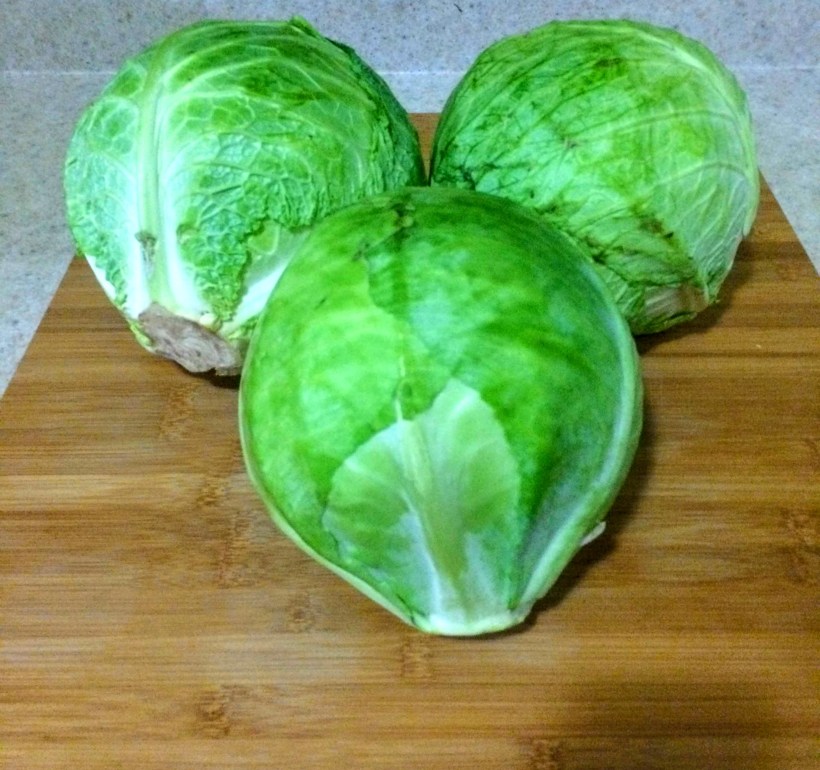
To begin, you will need to start with the cabbage. For this recipe, I will be using 3 heads of cabbage. You can use however much you want to, as long as you follow the guidelines for sauerkraut salinity.

Start by weighing out your cabbage, if you don’t have a food scale at home (you should get one) you can also find out the weight when you purchase the cabbage. You just have to make sure you note it somewhere.

INGREDIENT 1:CABBAGE

img_4810INGREDIENT 2:SALT
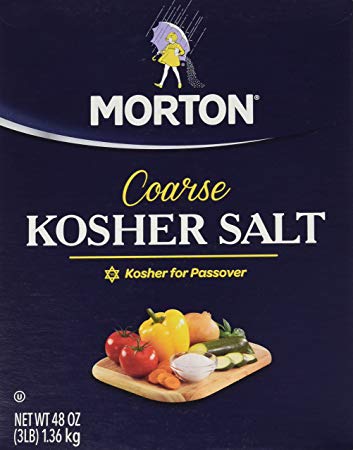
kosher salt

There are plenty of salts you can use for fermenting but I mostly stick to Kosher salt, not just for fermenting but in general. This post is about sauerkraut and not about salt varieties though. I just want to recommend using Kosher salt for this recipe.

The reason we want to weigh out our cabbage is because you want to add the right amount of salt. Fermentation of sauerkraut is done through a self-brining process. Salt is evenly mixed with finely sliced cabbage to allow moisture to be drawn out of the cabbage to form a brine in which safe fermentation can proceed. For sauerkraut you will want it to be in the range of 1.5-2.5% salinity for the brine. Which is achieved by adding approximately half a tablespoon or 7.5ml of salt per pound of cabbage. In grams that works out to be 16.5 ml or a bit over a full tablespoon to 1 kg of cabbage.

The reason you want the correct salt ratio is because you want to create a perfect atmosphere for the lactic acid fermentation to take place. If it does not have enough salt it will ferment quicker but it also has a higher chance of growing mold which will make your sauerkraut inedible. If you have too much salt the sauerkraut won’t be able to ferment enough and you will wind up with salt cabbage brine with lackluster flavor.

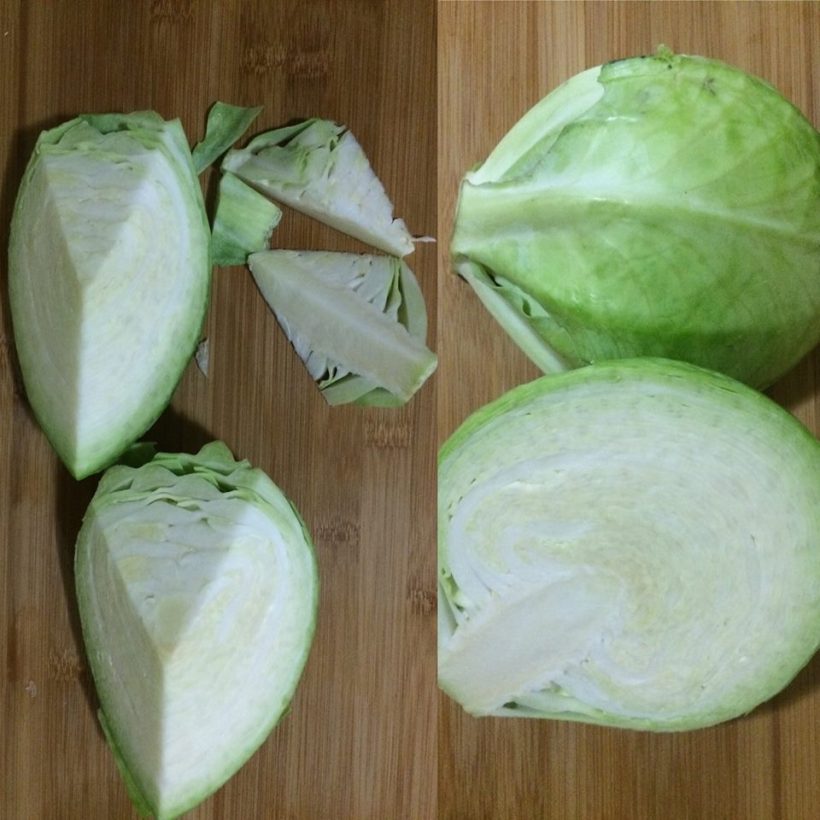
To begin, start by cutting the cabbage into quarters and removing the stems.

cabbage cutting

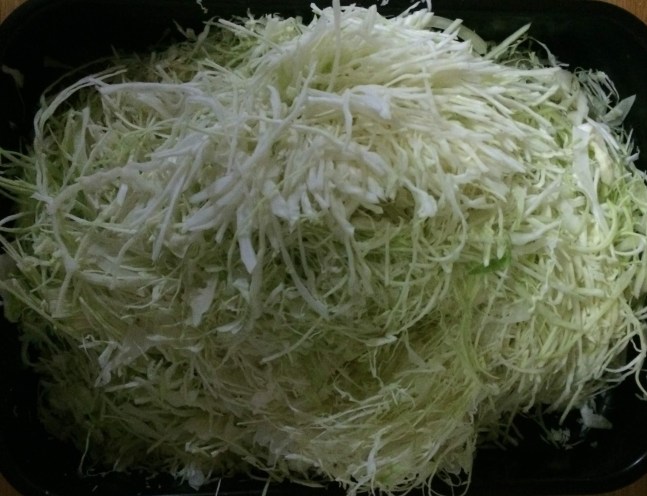
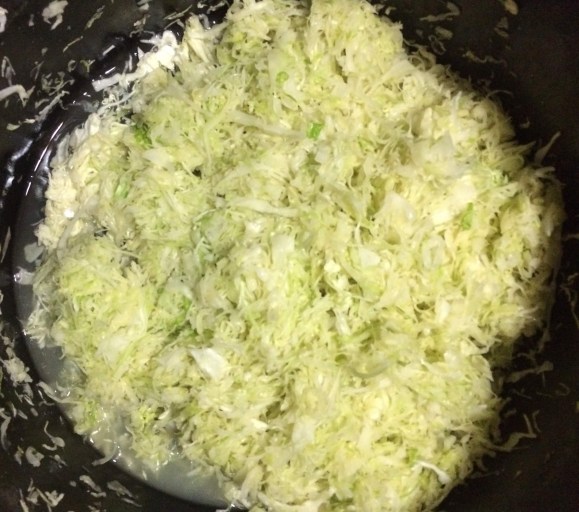
Then shred the cabbage into thin long strands, I used a mandolin slicer but you could also use the shred attachment of a food processor. Shred the cabbage in batches in a large container, I used a roasting pan. When it is finished it should look like this:

img_48172

Now at this point you are gonna start to realize you have way more cabbage than you thought. It is ok though, after salting the cabbage it will wilt and decrease in overall size. Now for salting the cabbage its best to do it in batches. Simply place your cabbage in a large vessel to mix it in. I used a large canning pot. Pour part of your salt around and onto the cabbage.

The best thing to do is massage the salt into the cabbage, as you do this you will start to feel the water coming out of the cabbage. When you feel the cabbage feeling very wet and wilted add more salt on and continue the process of salting and massaging until it looks like this.

img_48181

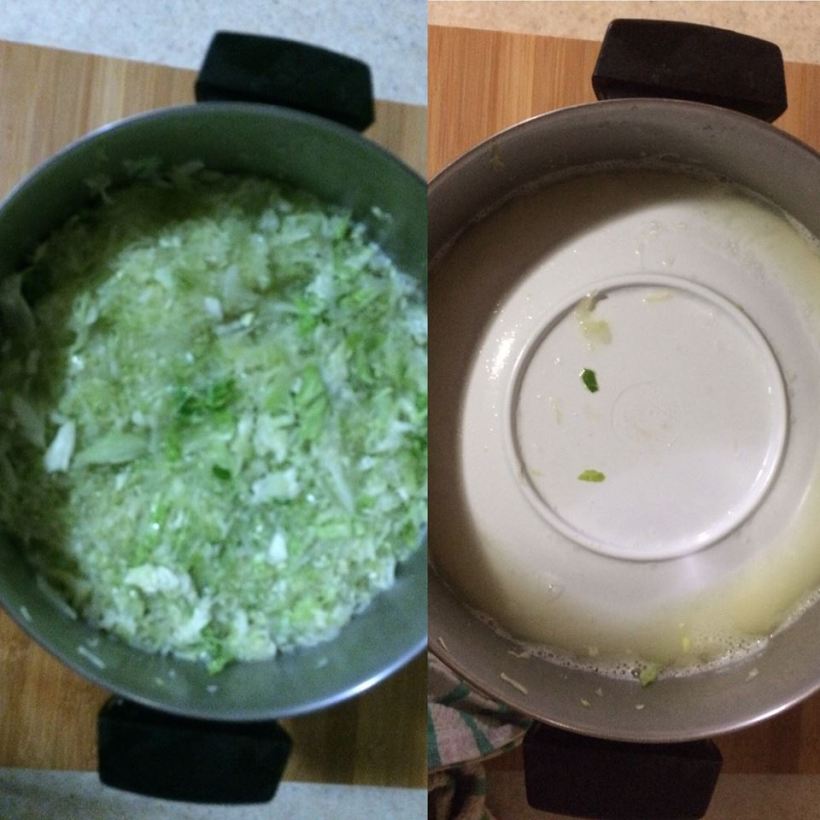
Now just pack it all into a large vessel and weigh it down so it is submerged under its own juices. I used a pot and some plates on top that happened to fit perfectly and kept the sauerkraut submerged under the liquid.

krqut pressing

If you do not have conveniently fitting plates for your fermentation vessel than a good hack would be to trace out the circumference of the vessel onto a piece of cardboard and cut it out. Wrap the cardboard in plastic or place in a large freezer bag to place on top of the sauerkraut and use something to weigh it down.

Now that is it for your basic sauerkraut, you could keep it as it is and place in jars to ferment alternatively to a pot. For this recipe though you will want to keep it in a large container to come back to it in a week to add the apples.

After you have patiently waited a week and let the miracle of lactic acid fermentation take over the cabbage, you will start to get a great sauerkraut smell and it will be time to add the apples. For this batch I am using 10 lbs or about 4.4 kg of red spartan apples.  You can shred or julienne the apples, I used a mandolin slicer with a julienne attachment but grating the apple also works very well. Make sure you grate or julienne the apple directly into the sauerkraut and mixing it into the juices before the apple oxidized and turns brown. Although it will still taste amazing, brown sauerkraut have a bit less than appealing look to them.

Now after you have mixed all the apples in you can either keep it in the same large vessel you used before or you can also put it into jars now. Either way you will want to let it sit out at room temperature for another week to ferment before storing it in the fridge.

When I canned this recipe I wound up with over 12 pint sized jars which are 16 0z or about 500 ml. It worked out perfectly to can it up for gifts and still have some leftover for myself.

I hope you enjoy making sauerkraut at home as much as I do and that it sparks an interest in doing more home fermentations. Until the next one, remember to keep it simple but full of love.

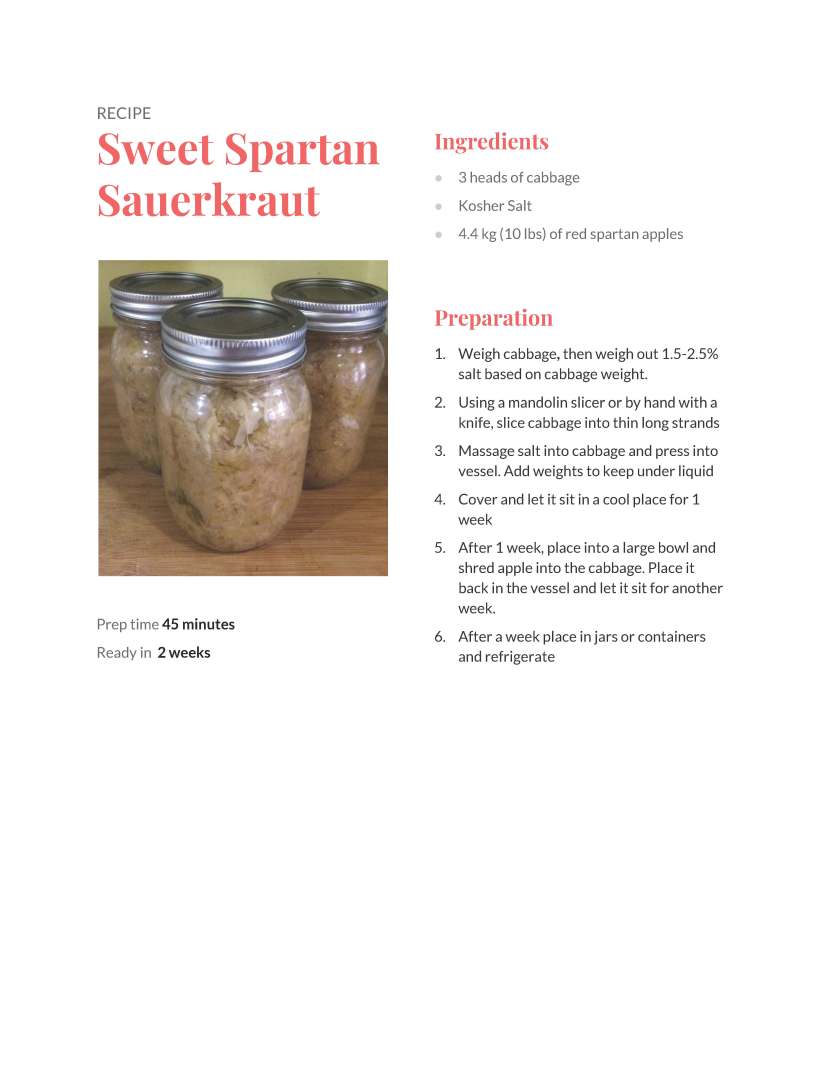
Recipe Card Below

recipe_ sweet spartan sauerkraut


Simply Delicious Portobello Veggie Patties

Whether you have sworn off eating animals or are forever drawn to the smell of crackling bacon, we all have friends that are either vegetarian or vegan. You know the scenario, you are having a BBQ and your friend Paul who is a vegetarian is coming so you run out and get some tofu hot dogs or veggie patties from the supermarket (note: your friend might not be named Paul). This time try making them yourself!  It is easy, quick and generally better than what you would find at the store.

With these easy steps you will be able to wow your herbivore friends and enjoy these delicious patties yourself.  I will also throw in some tips to make this recipe fully vegan and gluten free.

Now to start with the ingredients.

Ingredients

for this recipe we will need:

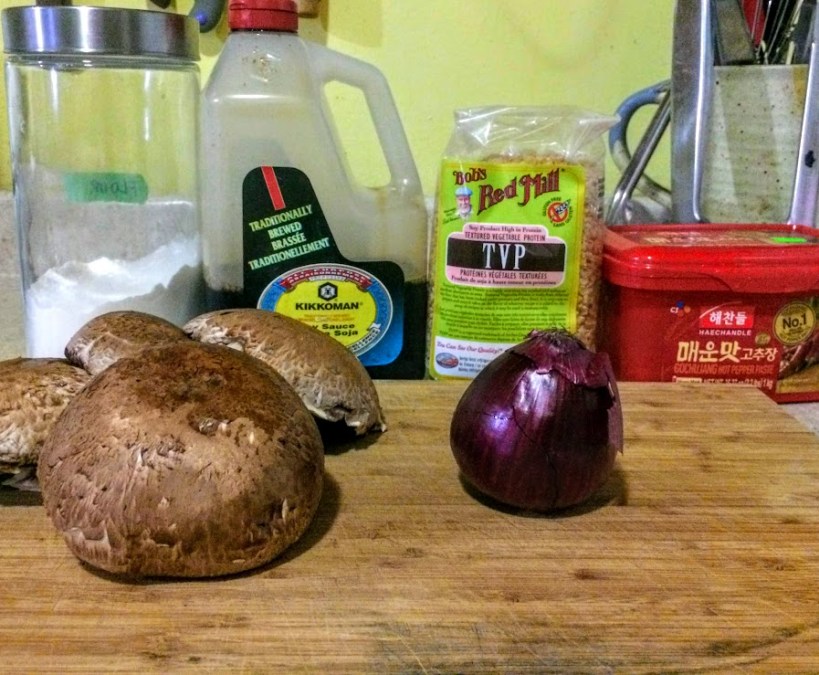
  • 4 large portobello mushrooms (300g or 10 oz)
  • 2 medium sized onions (300g or 10oz)
  • 500 ml or about 2 cups of TVP
  • 150 ml or 3/4 cup of soy sauce
  • 100 ml gochujang (Korean chili paste)
  • 300 ml or 1 1/4 cup water
  • 3 eggs
  • 100 or 2/3 cup all purpose flour
  • 1/4 cup vegetable oil

(Vegan version: Substitute the egg for 1 mashed up banana)

If you have never used TVP before it is a great meat alternative product that comes in a dried form and can be found at most grocery stored in the health food sections. TVP which stands for textured vegetable protein is usually made by processing high (50%) soy protein or soy flour then extruding it into various shapes and sizes though it can also be made from cotton seeds, wheat, and oats.TVP

The most common version you will find is the granulated style which is what we will be using for this recipe.

Now the first step in this recipe is simply chopping up the onion into small diced pieces.

cut onion

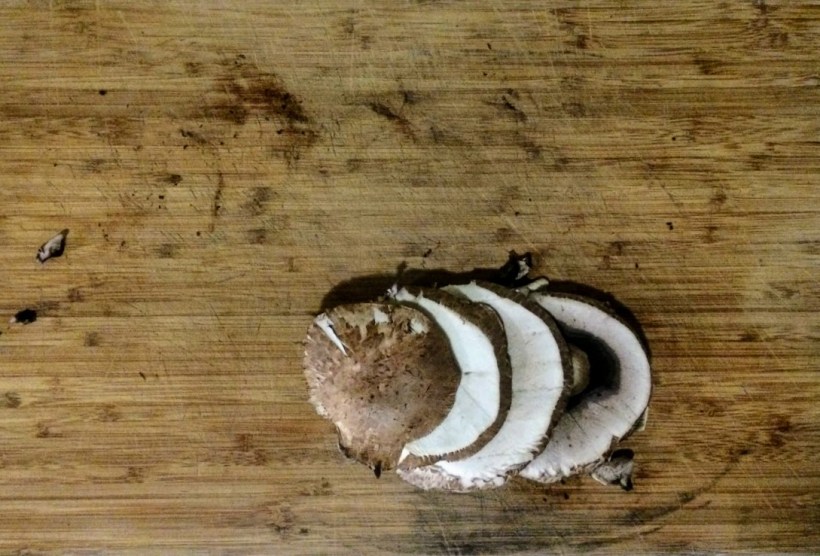
Next we will do the same with the portobello mushrooms. Start by slicing it horizontally into large disc-like pieces.

Slice mushroom one

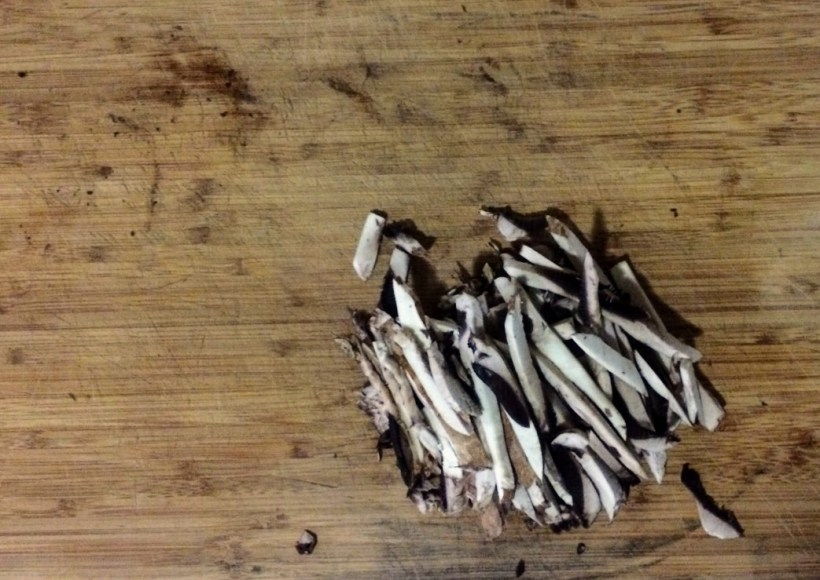
Next cut across to make strips or batonette.

Slice mushroom 2

Finally slice it into small cubes, this cut is also called bruinoise.

slice mushroom 3

Now start the onions in a pot with some vegetable oil on medium heat and cook till translucent, then you can add the mushrooms. Once you have added the mushrooms you are going to want to stir them in to cook them until a lot of the water in the mushroom has come out and the small cubes have reduced in size.

While the mushrooms are cooking, in a small bowl or container put the water, gochujang and soy sauce. When the mushrooms have reduced in size, stir the liquid ingredients in the pot and turn up the heat to boil. While it comes to a boil make sure to stir it well so that the gochujang evenly coats everything.

Once the pot starts to boil, turn off your burner and stir in the TVP then take it off the heat and let it cool for about an hour. It should look like the picture below:

Fake beef

Now let the mixture sit for an hour. Once the mixture has rested, you can preheat your oven to 400 F. Place a sheet of parchment paper on a baking sheet and oil it well. While the oven preheats, add the eggs and flour to the mixture. Once you add the eggs and flour, you will notice it start to get sticky. Keep on combining everything until it is a uniform sticky mixture. Use a spoon or your hands to portion out your patties. Eye it out to about a burger-sized portion. This recipe does about 8- 10 patties depending on how big you want your patties.

Tip: if you use your hands make sure to rub them with olive or vegetable oil first so the mixture does not stick

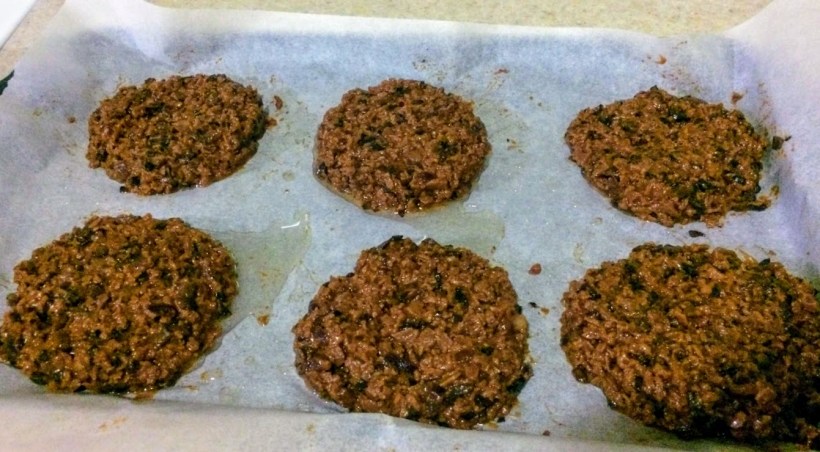
Form your patties onto the oiled parchment paper.

forming patties

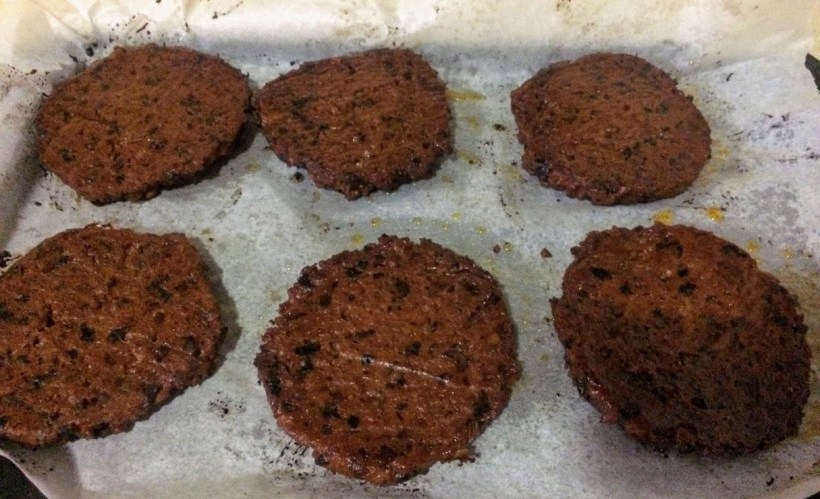
Put your patties in the oven and bake them for 8 minutes, then flip and cook on the other side for another 8 minutes.

Finished patties

Now you have some delicious veggie patties, you can enjoy them fresh from the oven or save them to grill later. If you want to have some around for when company come knocking, you can also freeze them for up to a year and take them out whenever you need. When I made the recipe this time, I portioned out 6 large patties and saved the rest of the TVP mixture to fry up with vegetable and tomato sauce the next night for a easy pasta sauce.

I hope you enjoy trying this recipe out yourself and until the next one, remember to keep it simple but full of love.

Recipe card below.

Portobello Veggie patties_Page_1


Easy Napa Cabbage Kimchi

Fermented foods have been a staple in Korean cuisine for thousands of years. Kimchi is South Korea’s national dish and it is also the most poplar among all of their fermented products. Traditionally in Korea, kimchi was made during the winter by fermenting vegetables and burying it in the ground in ceramic pots called Onggi.  Fermentation is an ideal way to preserve food as well as developing a lot of beneficial microorganisms.

Kimchi for the most part is a spicy fermented pickle made of various vegetables. It contains a high concentration of dietary fiber, while being low in calories. One serving also provides over 50% of the daily recommended amount of vitamin C and carotene. Most types of kimchi contain onions, garlic, ginger, and chili peppers. These vegetables also contribute to its overall nutritional value. Kimchi is rich in vitamin A, thiamine, riboflavin, calcium, iron and lactic acid bacteria.

Although traditionally it is made in ceramic or stone pots and buried to ferment, you don’t need anything special to make it at home. I was taught to make kimchi by using a 20 liter recycled dill pickle bucket but for this recipe, I will be using a 8 liter or 2 gallon stock pot.

First thing we are gonna do is chop up the cabbage. For this recipe, we will be using one large head of Napa cabbage which is about 2 kg or 4 1/2 lbs.

Traditionally kimchi is made by slicing a head of cabbage lengthwise and rubbing your ingredients between the layers but we are going to simplify the process by pre-chopping our cabbage.

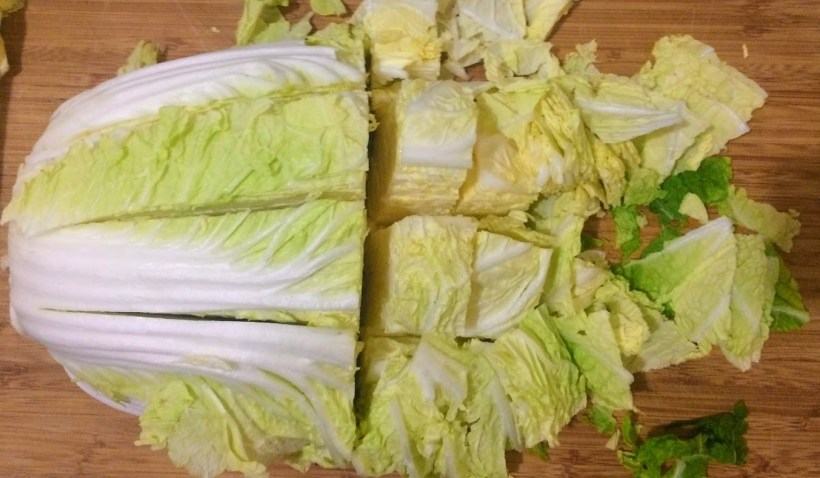
Slice the cabbage in half lengthwise. then make four lengthwise slices down the half head of cabbage.

Cabbage 2

Next, slice across the to make large rectangular pieces. Its best to keep the pieces fairly large because they will shrink through the fermentation process.

Cabbage 2

After you are finished chopping the cabbage, it is time to salt it. Place all the cabbage in a pot, bowl, or any vessel large enough to store all the cabbage. Now mix in 1/3 cup of Kosher salt and massage the salt onto the cabbage to evenly coat it. Then simply cover and let it sit at room temperature for 6-8 hours. Over time the salt will pull the water out and wilt the cabbage.

Salted Cabbage

While that is happening you can ready the other ingredients.

Ingredients

For this you will need:

  • 2 bunches of green onion
  • 1/4 cup raw cane sugar
  • 1 large piece of ginger about 3 inches or 7-8 cm
  • 8-10 large cloves of garlic
  • 1/3 cup of Gochugaru (Korean Chili flakes)
  • 1/4 cup fish sauce
  • 1/3 cup soy sauce
  • 1 tbsp salted shrimp paste (Can be found at Asian grocery stores)

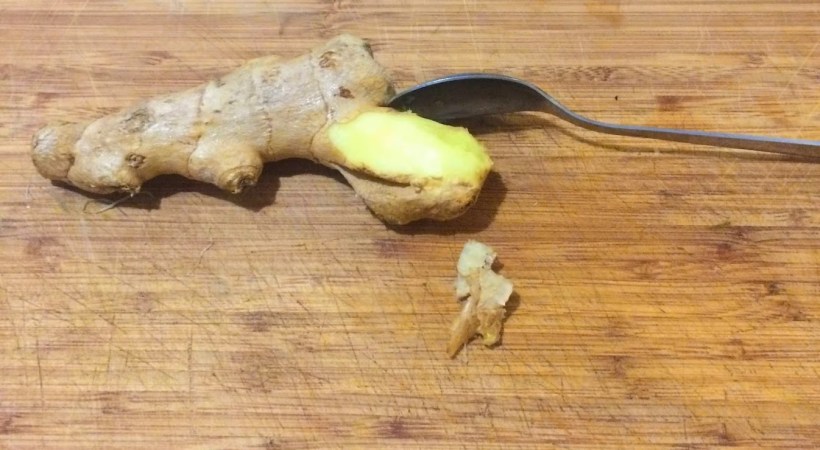
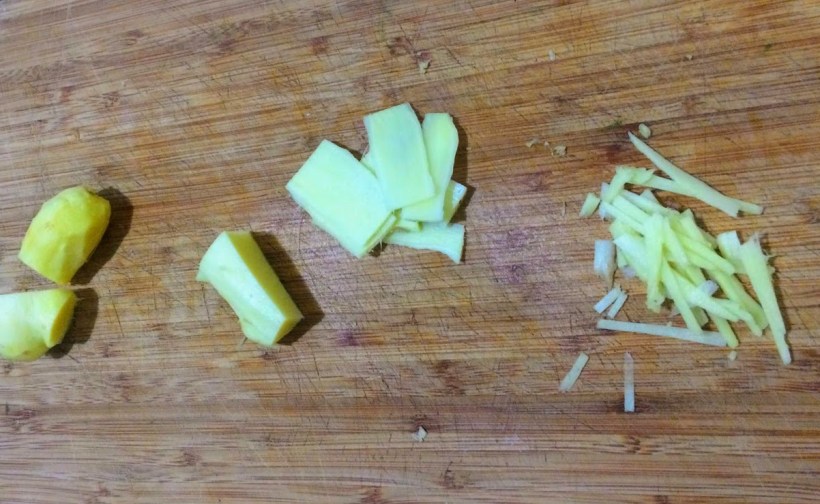
Start by peeling your ginger. I find using a spoon is easiest.Peeling Ginger

Slice the ginger by first cutting into 1 inch pieces then slicing each piece into strips.Sliced Ginger

Place the strips in a small mixing bowl and move on to the garlic. Peel your garlic and grate it into your mixing bowl with the ginger.

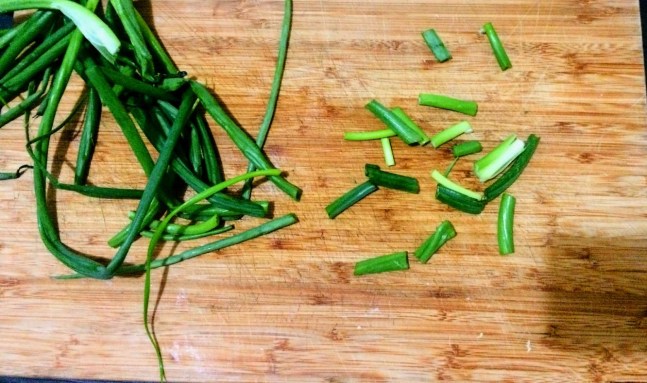
Next slice the green onion into 1 inch slices.  gronion

Measure out the rest of the ingredients in a the same mixing bowl and set aside.

After 6-8 hours, your cabbage will be ready. Simply remove all the cabbage from the pot, place in a colander and rinse under cold water to remove the excess salt and set aside.

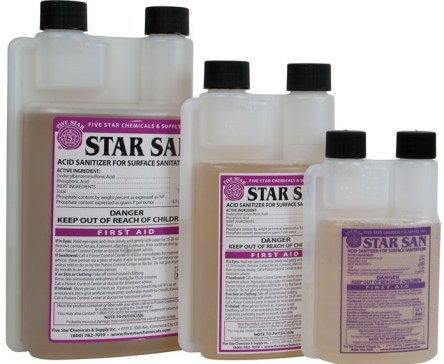
Rinse and clean your fermentation vessel and prepare to sanitize it. If you are using a pot you can sanitize it simply by filling it with water and boiling it for at least 2 minutes, but I would recommend picking up a no-rinse sanitizer like Star San which you can order online or find at a home brewing store for beer and wine. Follow the directions on the bottle to sanitize your fermenting vessel.

star-san_3

Sanitizing is important to prevent the growth of unwanted bacteria that will cause your kimchi to mold and ruin your entire batch.

Now that you vessel is sanitized it’s time to add everything together; either wear some gloves or prepare to get your hands dirty. Mix all the ingredients in the vessel making sure everything is evenly coated with spice and liquid. This is undoubtedly one of my favorite parts, smelling the rich aromas of all the ingredients combining together. It makes me salivate just thinking about it.

Kimchi to Ferment

Now for the fermentation, you will want the vegetables submerged under liquid. You can do this with food safe weights but there are other easy alternatives if you don’t have these on hand. For this method, I will be using a plate that happens to fit quite perfectly into this pot. Of course we will sanitize it before placing it inside.                                                            Plate weight

Another easy method would be to first trace the circumference of your vessel onto a piece of cardboard and cut it out a bit smaller so it will fit inside. Then place the cardboard cut out in a large Ziplock freezer bag (note: it does not have to be Ziplock brand and I am not sponsored by Ziplock but I am open to the idea). You can then use your makeshift weight to press the vegetables in the water. Some people advise against using plastic in fermentation, but because it will only be stored in the vessel for up to a week it will be fine. If you decide to get more into fermentation I suggest you invest in better tools but this method works perfectly and you will see that in the results.

Now to weigh it down into the liquid: for my DIY method, I will be using two (sanitized) pint sized or 440 mL jars filled with water.Bottles

Now all you have to do is cover the vessel with plastic wrap and store at room temperature in a cool dark place. I usually let it go for a week. It is up to you in the end, however I recommend a minimum of 3 days. After 3 days, open it up and give it a taste. The longer you let it go the stronger the taste and smell, but it also depends on the temperature. If it is being stored at a warmer temperature like in the summer time, it will speed up the fermentation process. I would only leave it out for 4 to 5 days maximum, although at any temperature you shouldn’t let it sit for much longer than a week or you will risk it completely rotting.

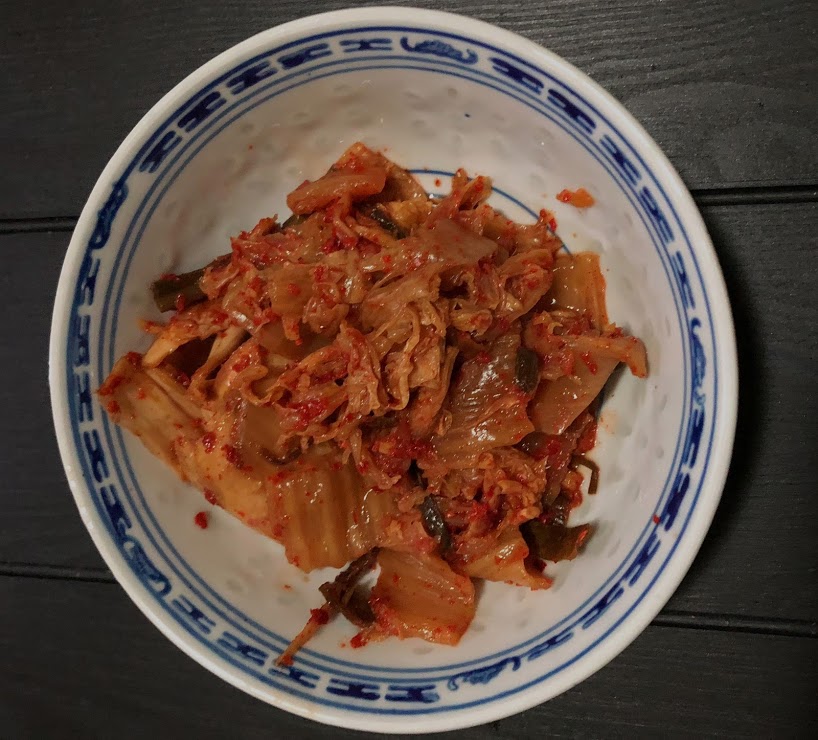
When it is finally ready, transfer it to some glass jars. This recipe will yield approximately 3 quart or 950 ml jars. Remember to give at least an inch of space between the top of the vegetables and the lid for the formation of gasses.Jar Kimchi

Now keep the jars in the fridge and enjoy whenever you want. Remember to burp the jars to release gasses periodically because the kimchi will still continue to ferment even at much cooler temperatures. As it stays in the fridge the taste will continue to develop and get stronger over time, which you can continue for up to a year. Although if you are like Kristina or I, a batch this sized probably won’t last more than a couple months.

I hope you enjoy making kimchi at home as much as I do and that it sparks an interest in doing more home fermentations. Until the next one, remember to keep it simple but full of love.

Recipe Card Below

Easy Napa Cabbage Kimchi

Szechuan Hot Chill Oil

Hot Chili oil is a very simple and classic recipe. It’s aromatic and spicy taste is perfect for dipping meats or dumplings, kicking up the flavor of your favorite soups, and a key ingredient in a lot of Szechuan dishes.

Hot chili oil has been a staple in Chinese cuisine for hundreds of years. It has changed into many different versions as it has traveled across Asia throughout different countries all the way to Europe where it is widely used in Italian cuisine.

It is a very easy recipe to make by just following some key steps you can easily have restaurant quality hot oil on hand to wow your friends and step up your food game.

The basic process for making hot oil is infusing flavor into various cooking oils and steeping it over chili flakes.

For this recipe we will be using:

500 ml or about 2 cups of vegetable oil

500 ml or about 2 cups chili flakes

4 bay leaves

2 cinnamon sticks

6 tbsp. Sichuan peppercorns

10 star anise

8 cloves garlic

about 1 inch piece of ginger cut into slices

2 bunches of spring onion bulbs.

Using spring onion bulbs in this recipe is a great way to use up parts of the onion that might otherwise be thrown out.

38223869_10156679033953189_6167383560278769664_n

Start by heating 500 ml or about 2 cups of oil vegetable oil in a deep pot over medium heat. For best results use a candy thermometer to monitor the temperature of the oil. you will want to heat the oil to between 225-250 degrees Fahrenheit or 100- 120 degrees Celsius. If you don’t have a candy thermometer and want to wing it that is OK too, just make sure you keep an eye on the oil so you don’t burn the ingredients and ruin the flavor of the oil. An easy way to check if the oil is hot is by dropping a piece of spring onion in to see if it starts sizzling. Once at the right temperature, add all the ingredients except the hot pepper flakes.


edited hot oil saucepan

Simmer the oil on mid to low heat for at least half an hour, watching that it doesn’t burn. Over time the oil will be infused with all the flavours of the ingredients and take on the mouth-numbing feel from the Sichuan peppercorns.

While the pot is simmering, put your red pepper flakes into another pot or heat resistant bowl. edited chili.jpg

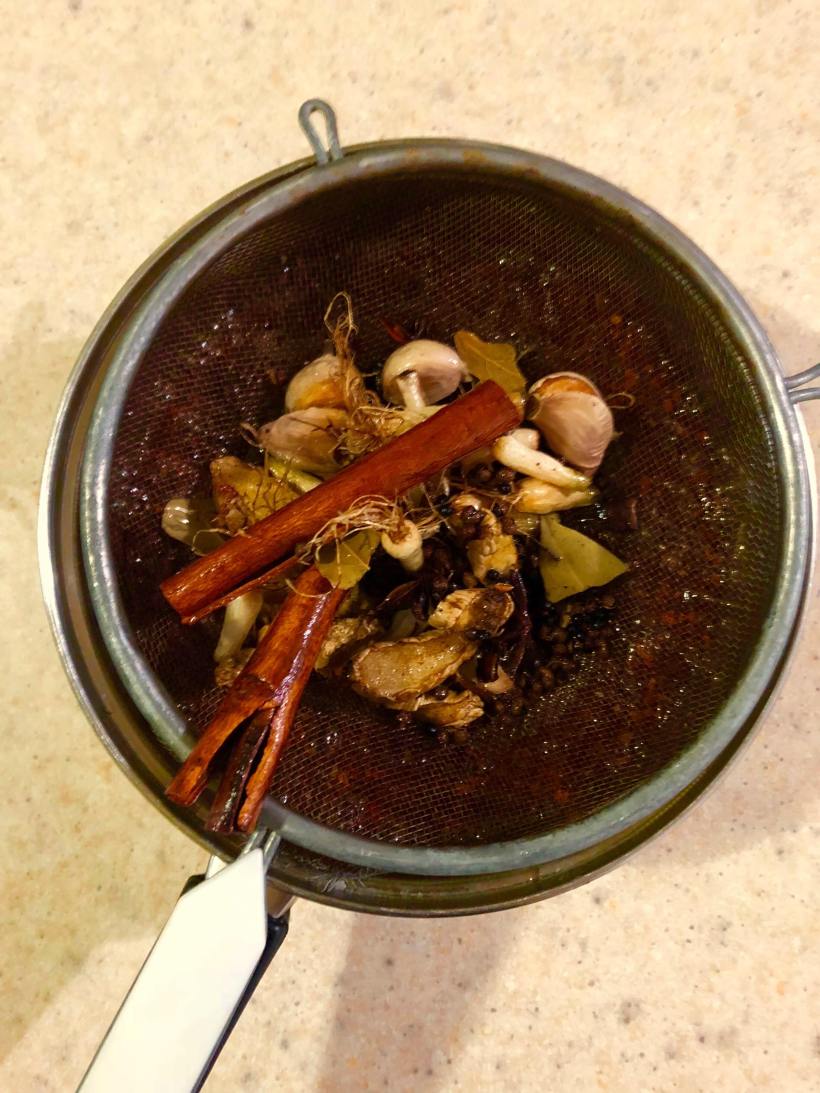
Now that you have simmered the oil for half an hour, take it off the heat and let it cool for 5 min. When cooled, pour the oil through a wire mesh strainer over the pot of chilies and stir well.

38480804_387606335096898_5468542117217304576_n

Now stir your chili oil and make sure that it is not burning then let cool and your chili oil is ready to enjoy. You can store you chili oil however way you like, if canned and sealed it will last for up to two years. If open it will last two years in a refrigerator or about a year in your cupboard.

38502317_215241149168144_5883723660690194432_n

Try it out with lots of different dishes like Dan Dan noodles, Mapo Tofu, or even add a boost of of flavor to spaghetti night.

Hope you found this recipe helpful and until the next one remember to keep it simple, but full of love

Recipe card below

Szechuan Hot Chili Oil